
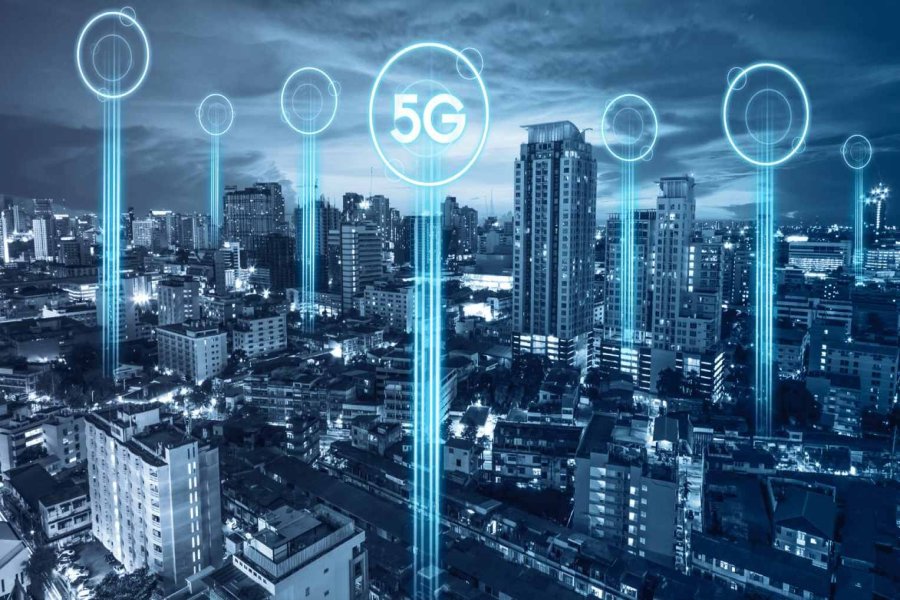
The digital world is entering a new age of connectivity. With the rollout of 5G, communication is faster, smoother, and more intelligent than ever before. This fifth-generation wireless technology is more than just an upgrade—it’s a revolution that’s changing how we interact, work, and live.
From real-time video calls to driverless cars and smart cities, 5G is the foundation for the next phase of technological innovation. This article explores how 5G is transforming the way we connect and communicate, and what it means for the future.
1. The Power of 5G: Faster, Smarter, and More Reliable
5G offers speeds up to 100 times faster than 4G, with lower latency and greater capacity. This means smoother streaming, instant downloads, and uninterrupted communication.
But it’s not just about speed. The true power of 5G lies in its ability to connect billions of devices seamlessly. From smartphones to smart appliances, 5G enables real-time communication between devices, paving the way for a hyper-connected world.
Businesses, healthcare systems, and governments are all leveraging this technology to improve efficiency, productivity, and safety.
2. Revolutionizing Communication
5G has transformed how we communicate in ways that go beyond texting or calling. High-definition video calls, live streaming, and augmented reality (AR) experiences are now smoother and more immersive.
For remote workers, 5G ensures stable video conferencing and real-time collaboration without lag. In entertainment, it enables ultra-high-quality streaming, online gaming with zero delay, and virtual concerts that bring audiences together across continents.
The combination of speed and stability has made 5G the backbone of modern communication.
3. The Internet of Things (IoT) and Smart Living
One of the most exciting impacts of 5G is its role in expanding the Internet of Things. With its ability to connect millions of devices simultaneously, 5G turns ordinary environments into intelligent ecosystems.
Smart homes equipped with connected thermostats, lighting, and security systems operate more efficiently. In cities, 5G powers smart traffic systems that reduce congestion and improve safety.
Even in agriculture, IoT sensors connected through 5G help farmers monitor crops, weather, and soil conditions in real time, increasing productivity while conserving resources.
4. The Future of Work and Collaboration
The rise of remote work has made reliable connectivity essential. 5G empowers virtual offices by enabling real-time collaboration through video, AR, and VR platforms. Teams can share large files instantly, conduct immersive training sessions, and manage projects seamlessly.
For industries like construction or engineering, workers can use 5G-powered AR glasses to view blueprints or instructions while on-site. In education, virtual classrooms supported by 5G allow students around the world to engage with teachers and peers without interruption.
The way we work is changing—and 5G is at the center of that transformation.
5. Enhancing Healthcare with 5G
In healthcare, 5G is revolutionizing how doctors and patients connect. Telemedicine, remote surgery, and wearable health monitors are becoming more reliable thanks to low-latency connections.
Doctors can now perform robotic surgeries from miles away, guided by real-time data. Patients can wear smart devices that track vital signs and instantly share results with their physicians.
This technology also enhances hospital operations, improving data sharing and patient management. 5G makes healthcare more accessible, efficient, and potentially life-saving.
6. The Rise of Smart Cities
5G is the foundation for the smart cities of the future. With its massive bandwidth and fast data transfer, it supports advanced infrastructure—from automated streetlights to AI-driven public transport systems.
Smart sensors monitor traffic flow, energy use, and air quality, allowing cities to respond dynamically to challenges. Emergency services benefit too, as real-time data helps first responders make quicker, more informed decisions.
These innovations not only improve safety and sustainability but also make urban living more comfortable and efficient.
7. Transforming Industries with 5G Innovation
Across industries, 5G is unlocking new possibilities:
-
Manufacturing: Factories use 5G to enable automation, predictive maintenance, and real-time monitoring of production lines.
-
Retail: Smart stores use 5G to deliver personalized experiences and seamless checkout processes.
-
Transportation: Autonomous vehicles rely on ultra-fast communication between cars, traffic systems, and infrastructure to ensure safety and coordination.
These advancements are driving productivity and setting new standards for innovation worldwide.
8. Challenges and the Path Ahead
Despite its benefits, 5G faces challenges. Building the necessary infrastructure is expensive and time-consuming, especially in rural areas. Privacy and security concerns also arise as more devices become connected.
Governments and tech companies are working together to address these challenges by investing in infrastructure, establishing global standards, and improving cybersecurity measures.
As adoption grows, these efforts will make 5G accessible and secure for everyone.
Conclusion
5G is more than just faster internet—it’s a gateway to the future. It’s transforming the way we connect, communicate, and experience the world. From powering smart cities to revolutionizing healthcare, 5G is creating a world where technology responds to human needs in real time.
As this network continues to expand, it will unlock endless possibilities for innovation, collaboration, and connection—bringing us closer to a smarter, more connected future.
Frequently Asked Questions
What makes 5G different from 4G?
5G offers faster speeds, lower latency, and the ability to connect many more devices simultaneously compared to 4G.
How does 5G improve communication?
It enables ultra-fast, reliable connections for video calls, live streaming, and real-time collaboration.
What industries benefit most from 5G?
Healthcare, manufacturing, transportation, and entertainment are among the top industries transformed by 5G.
How does 5G support smart cities?
5G powers real-time monitoring and automation in traffic, energy, and safety systems, making cities more efficient and sustainable.
Will 5G replace Wi-Fi?
Not entirely. While 5G provides mobility and speed, Wi-Fi remains useful for local networks and indoor environments.
